

What is an optical sorting machine, and why choose one?
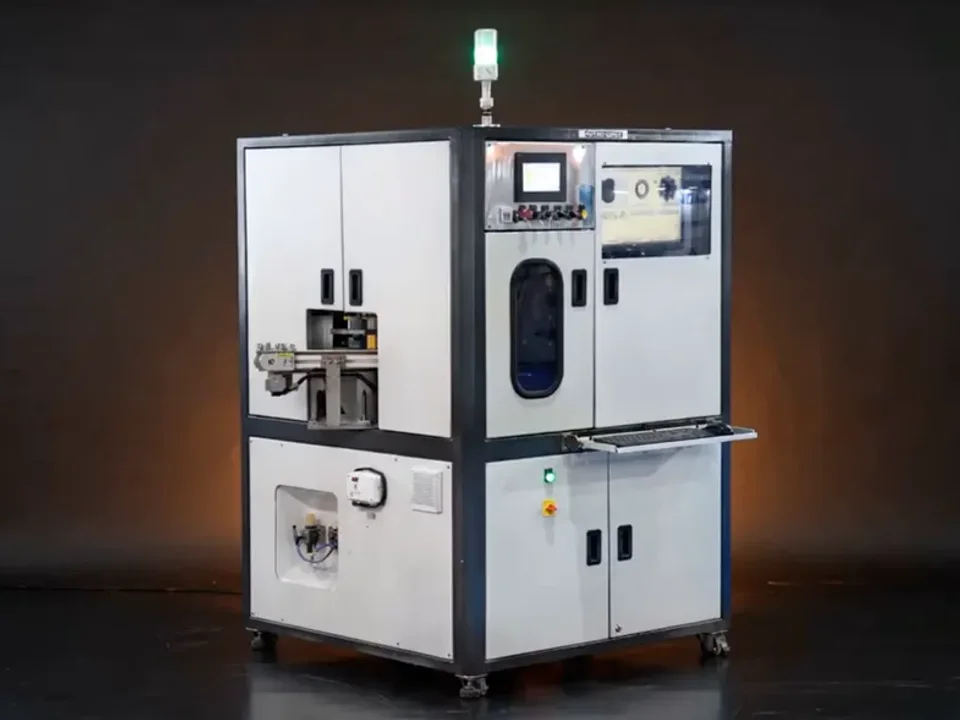
An optical sorting machine is an automated inspection system: cameras, lighting and vision software examine every component for dimensions, shape and surface condition, and a sorting mechanism separates the parts that fail from the parts that pass.
It replaces sampling and manual sorting with 100% inspection at production speed — the Visimaster disc machines run at up to 300 parts per minute, the O-ring configuration at up to 600.
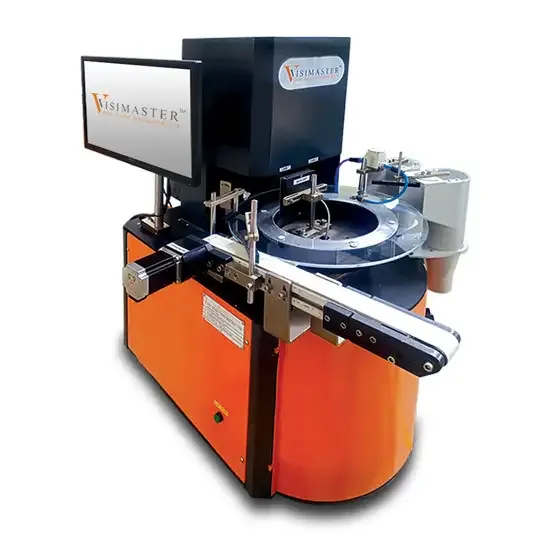
From bin to sorted output in five steps
- 1
Automatic feeding
A bowl feeder separates and orients the parts onto the rotating disc or conveyor.
- 2
High-speed imaging
Camera stations image every part from the top, side, bottom and 360° outer surface under controlled lighting.
- 3
Vision analysis
Software measures the programmed dimensions and inspects surfaces; AI/DL handles defect patterns that vary from lot to lot.
- 4
OK / NG sorting
An air jet ejects NOT-OK parts; OK parts continue — with batch-wise separate ejection where required.
- 5
Reporting
Every result is logged; the Nano Glass Disc, the Conveyorised line and the robotic sorting cell add batch-wise and SPC reports.
Parts sorted on optical sorting machines
- Industrial fasteners — bolts, screws, nuts, washers, rivets, circlips
- Automotive — precision fasteners, shafts, gears, turned parts, ball pins
- Rubber and plastics — O-rings, seals, washers, moulded components
- Electronics — screws, pins and connectors with tight tolerances
- Brass and precision turned components
What optical sorting changes on the line
- Every part inspected, not a sample — at up to 300 PPM
- Micron-level dimensional deviations and visible defects caught by the same machine
- Fewer customer-end rejections, less rework and re-sorting
- Inspection reports for audits and compliance, generated automatically
- Consistent judgement — no fatigue, no operator-to-operator variation
Optical sorting machine or vision sorting machine?
Both names describe the same class of machine: cameras inspect every part and a reject mechanism removes the bad ones. Every Visimaster optical sorting machine — glass disc, metal disc, double disc, conveyorised and robotic — is a vision sorting machine in that sense. What differs between them is the feeder and the part handling, not the camera check.
Visimaster optical sorting machines
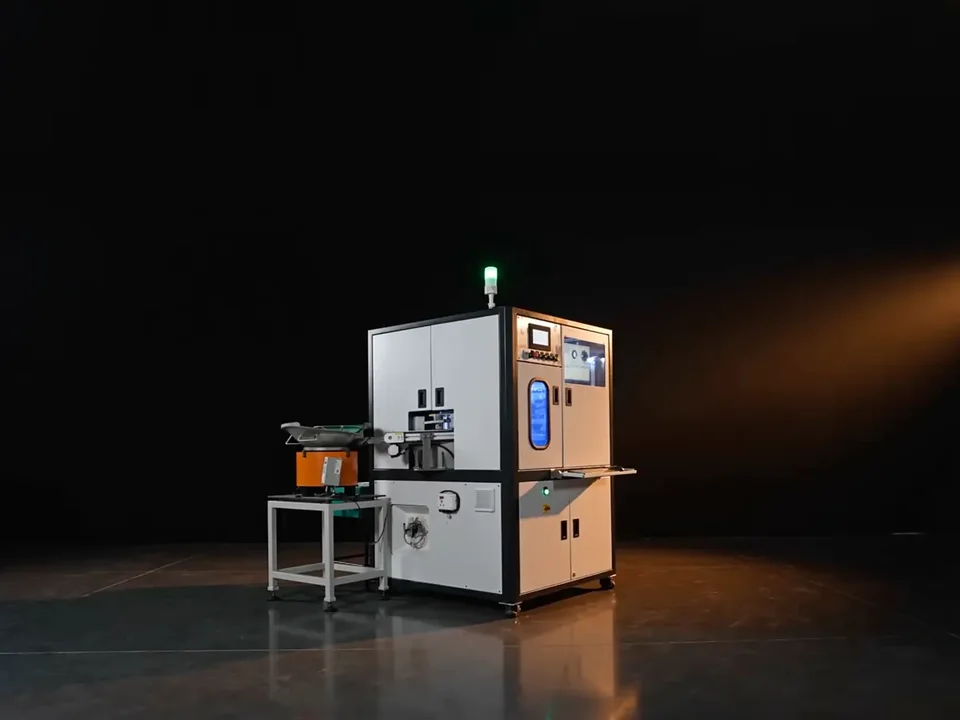
Glass Disc
Fasteners, O-rings, washers & turned parts inspected from every side on a rotating glass disc.
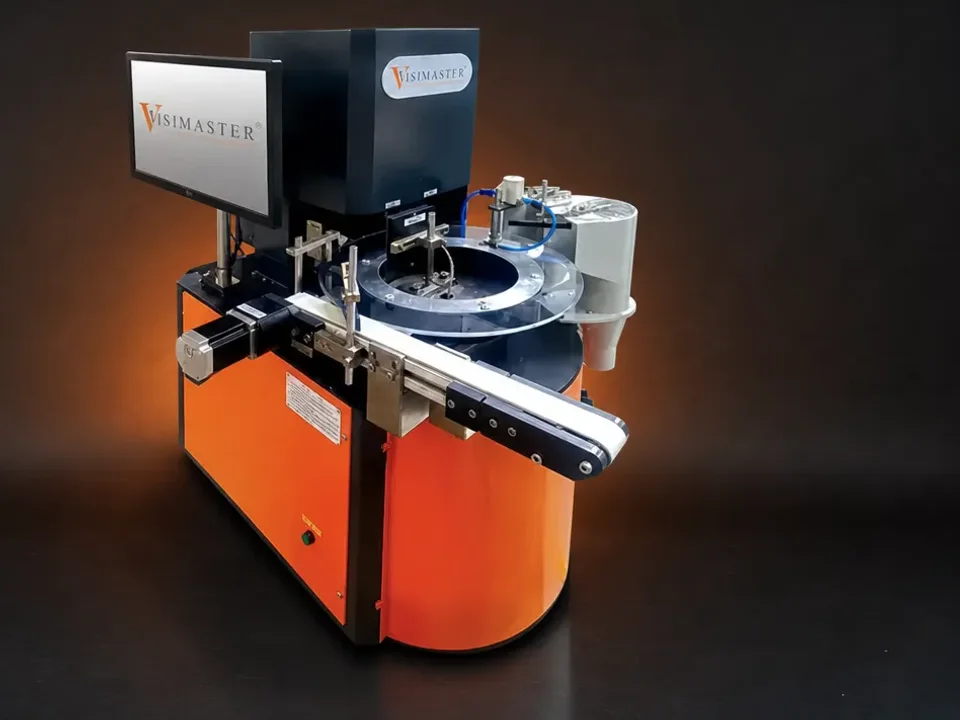
Nano Glass Disc
Compact table-top glass disc for turned precision parts, fasteners and washers — detailed dimensional inspection in a bench footprint.
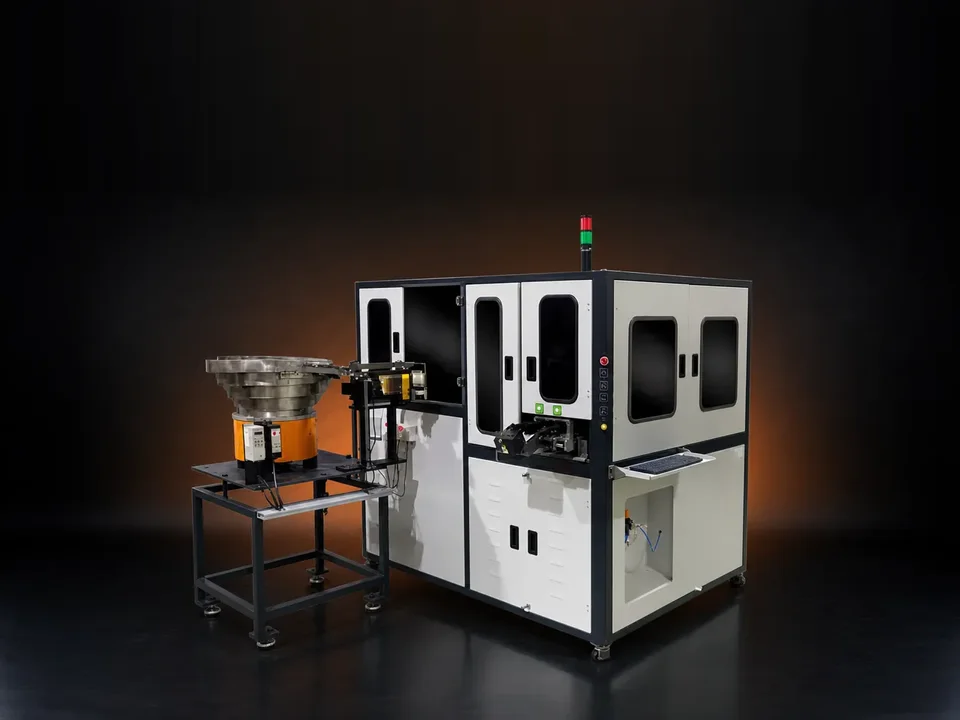
Double Disc
Parts flipped mid-cycle between two discs to capture 100% of the surface area — with AI/DL defect detection.
Metal Disc
Bolts, screws, ball pins and headed fasteners — dents, cracks, thread damage and 360° surface defects caught at multiple inspection stations.
Support across India
- Installation and commissioning by our engineers
- Operator training on the machine and the reports
- Preventive maintenance and spares
- Remote diagnostics to keep downtime short
Optical sorting machines on video
From our own channel: the Glass Disc sorting washers and finding O-ring defects at line speed.
Optical sorting machine for washers
How the machine detects O-ring defects in seconds
Glass Disc vision inspection & sorting machine
Optical sorting machines installed across India
Visimaster sorting machines run with clients in Pune, Mumbai, Nashik, Nagpur, Ahmedabad, Vadodara, Rajkot, Jamnagar, Jamshedpur, Bengaluru, Chennai, Coimbatore, Delhi, Gurgaon, Faridabad and Ludhiana, supported from the works in Bhosari, Pune.
Parts sorted and the defects the cameras flag
Sample-part collages and labelled defect cards from our own catalogue: bolts, washers and O-rings.
Questions buyers ask
Can optical sorting replace manual inspection?
Yes. It inspects every part, at the same standard, without fatigue — which manual sorting cannot do at production volume.
What defects can it detect?
Scratches, cracks, dents, burrs, cut marks, flash and short mould, thread damage, missing operations and dimensional deviations — the exact list per machine is on its page.
Is it suitable for small parts like fasteners?
Fasteners, washers, O-rings and small turned parts are exactly what the Glass Disc and Nano Glass Disc are built for.
How is it customised for my part?
Feeding, camera positions, lighting and the inspection program are configured to your part and defect list after a feasibility study on samples.
Which industries use optical sorting most?
Automotive, fastener, rubber and plastic moulding, electronics and precision engineering — anywhere a defective part costs more downstream than inspecting it.
What decides the cost of an optical sorting machine?
The part, the defect list and the required rate. Feeding method, number of camera views, lighting and reject handling are configured after a feasibility study on your samples, and the sales engineer prepares the quotation for that configuration.
Will it catch the defects on your part?
Send one photo of your part with your production quantity — VisiExpert, our AI application engineer, checks it against the installed range and a vision engineer replies within 24 hours. Sample parts are confirmed on a real machine, typically within a week. Free.
Contact the works