

Special purpose machines built around one part and one process.
Off-the-shelf machinery often falls short of a specific production task. A special purpose machine (SPM) is built for that one task — assembling a delicate component, sorting at high speed, inspecting a feature no standard station reaches — and does it with the precision and speed the task demands.
Varad Automation engineers turnkey SPMs that combine robotics, machine vision and assembly into one automated cell, from the application study to commissioning on your line.
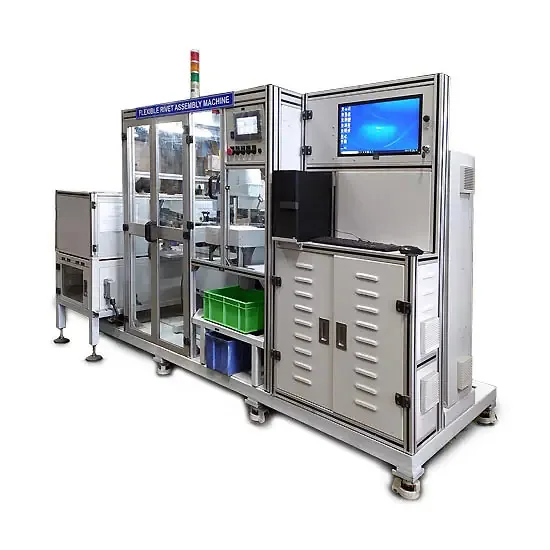
What is a special purpose machine?
A bespoke machine built to handle one manufacturing process more efficiently and accurately than a general-purpose machine could. Where the Visimaster catalogue machines are platforms configured to a part, an SPM starts from the part and the process and is designed around them — robot, vision, fixtures, feeding and ejection chosen for that job alone.
Special purpose machines in service
Each began as a customer's specific problem and is now a standard platform.
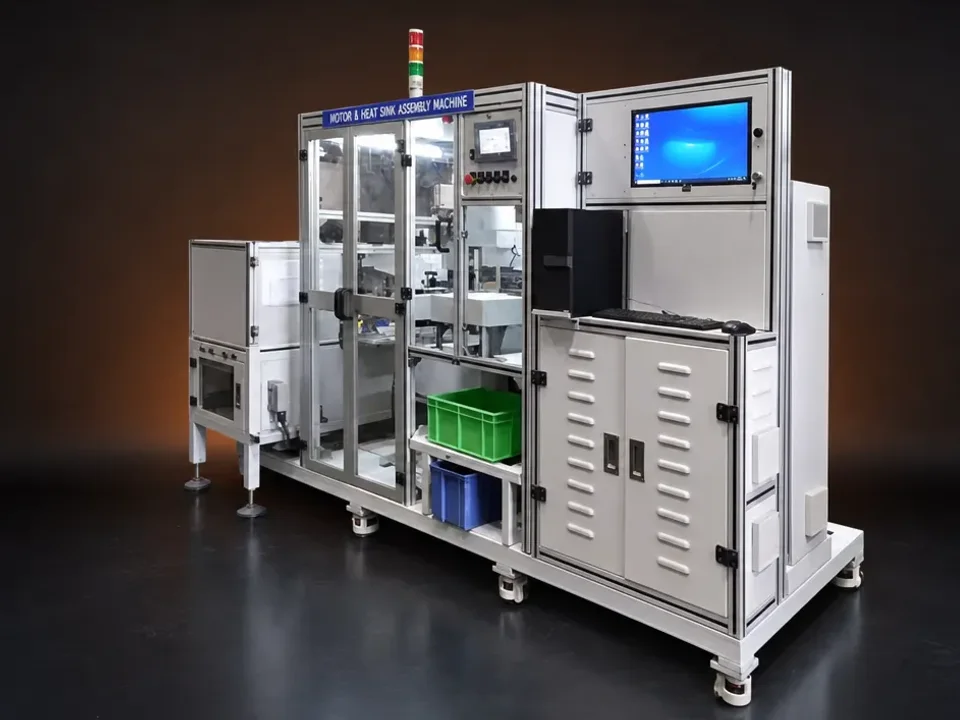
Robotic Assembly
Vision-guided assembly of delicate child parts — rivet and fuel-lid assemblies — inspected and assembled in one cell.
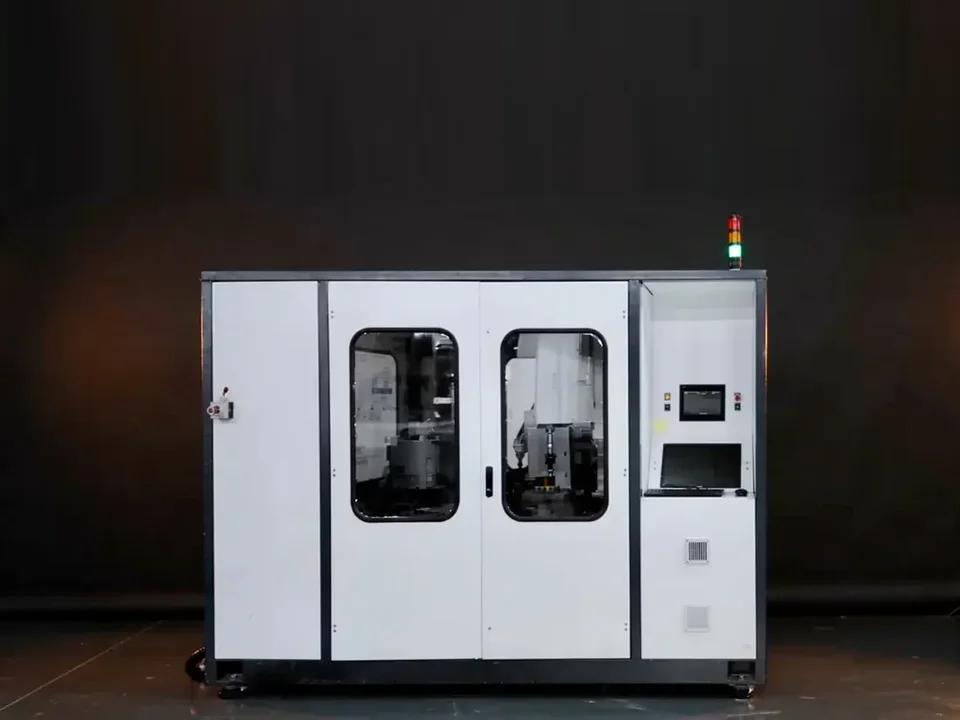
Robotic Sorting
Vision-guided robotic cells that inspect all dimensions and all visual defects, then segregate the parts.
What each platform does
- Robotics & Vision Based Assembly Machine — a robot guided by vision assembles small child parts such as rivets and fuel-lid assemblies at up to 100 parts per minute; delicate and critical parts are inspected and assembled in one cell, without the damage manual handling risks
- Robotics & Vision Based Sorting Machine — vision inspects all dimensions and all visual defects, the robot segregates; built for low-to-zero maintenance with batch-wise and SPC reports for traceability
- O Ring Assembly Machine — a dedicated assembly machine: vibratory bowl feeding, a dead-nest track and dual-piston pneumatic expansion place O-rings on precision components repeatably, removing a slow, error-prone manual step
Why manufacturers commission an SPM
- Throughput — engineered for the rate the process needs
- 100% quality assurance — every component inspected and assembled to standard
- Lower cost — less labour on the task, less material waste, fewer recalls
- Safety — tedious or hazardous handling automated away from people
- Data — real-time logging, PDI and SPC reports for process control
From your process to a turnkey machine
- 1
Understand
We study the part, the process and the takt time with your team.
- 2
Design
Robot, vision, fixtures, feeding and ejection are specified for the task; feasibility is proven on your samples.
- 3
Build and prove
The machine is built and tested at our Bhosari works against your acceptance criteria.
- 4
Commission and support
Installed on your line, operators trained, supported locally.
A special purpose machine in pictures
The robotic assembly cell from our own catalogue.
A special purpose machine running
From our own YouTube channel — press play to load a film.
Robotics & vision based assembly machine
Questions buyers ask
Can an SPM combine inspection with assembly?
Yes — the robotic assembly cell inspects and assembles small child parts in one cell; further stations are added to the same frame as the task requires.
What is the difference between an SPM and a catalogue machine?
A catalogue machine such as the Glass Disc is a platform configured to your part. An SPM is designed from scratch around one part and one process, when no platform fits.
What kinds of tasks have you built SPMs for?
Vision-guided assembly of small child parts, robotic sorting of components by dimension and visual defect, and O-ring placement on precision components.
How fast is the assembly machine?
The Robotics & Vision Based Assembly Machine runs at up to 100 PPM; a single machine handles a variety of parts.
Do SPMs come with inspection data?
Yes — logging, PDI and SPC reports are part of the build, so the SPM's output is traceable like the rest of the range.
Have a process no standard machine fits?
Describe the part, the task and the rate to VisiExpert, our AI application engineer, or courier samples to our Bhosari lab. An automation engineer scopes the cell and confirms feasibility — free.
Contact the works